
When parents separate, school, activities, appointments and family routines continue. The simplest way to keep those moving parts from becoming repeated conflicts is to agree on a schedule that both homes can see and understand.
Key takeaways
- Choose a pattern that fits the children’s ages, school routine and distance between homes.
- Record holidays, exceptions and change requests in the same shared calendar.
- Keep schedule conversations factual and focused on the children.
- Review the arrangement as family needs change.
Why a clear custody schedule matters
Predictable routines help children understand where they will be, who will collect them and what comes next. They also reduce the number of practical questions parents need to resolve at the last minute.
A well-defined schedule can help both homes:
- reduce misunderstandings and duplicated planning;
- create stability around school, activities and bedtime routines;
- prepare holidays and special occasions earlier;
- make necessary changes visible to everyone involved.
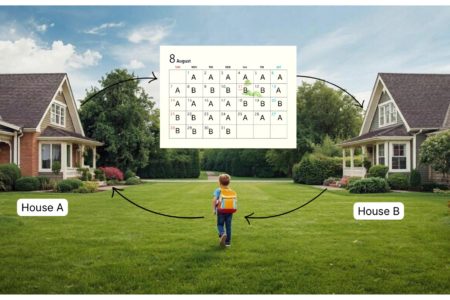
Common shared custody schedules
There is no single pattern that fits every family. The children’s ages, the distance between homes, school commitments and each parent’s availability all matter.
Alternating weeks
Children spend one full week with each parent. This is easy to remember and limits transitions, but a full week can feel long for younger children.
2-2-5-5 schedule
Each parent has the same two weekdays, followed by alternating five-day periods. Children see both parents frequently while each home still gets regular weekends.
3-4-4-3 schedule
Children alternate every three or four days. The shorter periods may suit younger children, although the pattern creates more handovers.
Plan for changes before they happen
Even a carefully agreed schedule will need exceptions. School events, medical appointments, work commitments and holidays all create changes. Agree in advance on how a request is made, how quickly the other parent should answer and when a change becomes confirmed.
Keep the permanent parenting plan separate from one-off adjustments. That makes it clear whether a change applies once or alters the recurring routine.
SHARED CALENDAR
Keep the schedule visible in both homes.
2houses brings recurring parenting patterns, activities and change requests into one shared calendar on web and mobile.
Try 2houses free for 14 daysUse one shared source of truth
Text messages are useful for quick conversations, but they are difficult to search and easy to interpret differently. A shared co-parenting calendar gives both parents the same current view and keeps schedule changes connected to the actual plan.
Whichever tool you use, look for recurring schedules, activity details, notifications, clear change history and access from both web and mobile.
Frequently asked questions
What is a shared custody schedule?
It defines when children stay with each parent after a separation and records the recurring routine, holidays and agreed exceptions.
What is the most common schedule?
Alternating weeks, 2-2-5-5 and 3-4-4-3 are common patterns. The best choice depends on the children’s ages and the practical circumstances of both homes.
How should parents handle schedule changes?
Use one agreed channel, make requests early where possible, and record the confirmed change in the shared calendar so both parents see the same plan.
This guide provides general organisational information and is not legal advice. Parenting arrangements should follow the applicable agreement or court order in your jurisdiction.